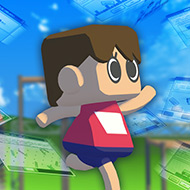
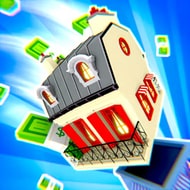
What happens when there’s no mission list, no timer, and nothing to unlock by “winning” in Toca Boca World? That’s the first question most new players ask. There’s no fail state, no notification nudging toward a next task — just customizable characters, a growing city of districts, and objects that respond to a tap or drag. The game never explains itself; Toca Boca leans on curiosity instead of completion.
Getting Your Bearings in Toca Boca World
Every save starts in Bop City, with eight buildings, each holding its own interior and props:
- An apartment
- A theater
- A clothing store
- A supermarket
- A beauty salon
- A food alley
- A garbage dump
- A post office
Nothing here is locked behind a task — a character can walk from the beauty salon into the theater with a new haircut, no explanation required. Character creation alone can eat a first session, mixing skin tones, hairstyles, and outfits however a player likes.
The detail that surprises people new to Toca Boca is the inventory bag: drag an object into a character’s bag icon and it travels into any other building.
Bop City, Cloud Central, and the Rest of the Map
Bop City is only the entry point. Toca Boca World has grown into more than ninety locations across themed districts, each with its own tone. Cloud Central leans into home design; Downtown adds a hospital, a court, a business tower, a shopping mall, and a waterfront strip.
Storytelling-minded kids treat district transitions as scene changes in a longer plot, while younger players just enjoy cycling through outfits with no plot attached. Completionist players visit every building in a district before moving on, treating the map as something to finish.
Not every district is available from the start, and that’s the most common complaint. Reaching new districts and character packs usually involves in-app purchases, which can add up fast on a shared family device. It’s fair criticism — Bop City alone is generous, but the fuller map costs something to unlock.
Why There’s No Score, Timer, or Ending
The honest answer to how you win Toca Boca is that you don’t, by design. Progress is measured in what’s been unlocked and the stories already built with it, which some players find liberating and others find directionless. Parents trying to understand the point of Toca Boca just need reassurance that the lack of goals is intentional.
That doesn’t mean the experience stays flat. Toca Boca World includes dozens of named characters beyond the ones a player customizes, and using several at once turns a session into directing a small cast rather than one avatar. Early on, most players stick to two or three characters and one building; once the food alley, the post office, and the apartment feel familiar, mixing characters across districts becomes the next step.
Worth noting: sound effects and small animations are charming but repeat quickly, with no way to skip past them. It’s a minor gripe in an otherwise open sandbox.
What Newcomers Usually Get Wrong
The biggest misunderstanding is expecting a save file that tracks achievements. There isn’t one — what persists is the world state itself: which outfits characters own and which objects sit where.
Community shorthand helps once you know it. Regulars call the whole thing “Toca World,” refer to custom characters as “Tocas,” and describe unscripted sessions as “silent play” — no dialogue, just movement and object placement.
Questions Players Ask About Toca Boca
- Is there a way to lose or fail in Toca Boca? No. There’s no health bar, no timer, and no scenario that cuts a session short — characters and objects simply stay where they were left.
- Do you need to unlock Downtown before other districts open up? Not necessarily. Districts unlock independently, though many players head there early for its wide mix of buildings.
- Can items move between different districts? Yes, through a character’s inventory bag — anything dragged into it travels into any other building or district on the map.
Toca Boca doesn’t ask anyone to finish anything, and that’s the whole pitch once the initial confusion wears off. What’s left is a city that keeps expanding — Bop City gives way to Cloud Central, Cloud Central gives way to Downtown, and every district adds new corners for a story that never technically ends.